
Trace Back Vigo County's Former Owners
Start with the current parcel in Beacon. Then find the newest matching deed in the Doxpop Recorder. The rows below serve as a research log, not a claim about any specific parcel. Complete one only after the legal description matches.
| Transfer stage | Coverage clue | Where held | What to save |
|---|---|---|---|
| Recent index | From November 1996 | Doxpop / Recorder | Grantor, grantee, date, document |
| Online image | From January 2001 | Doxpop / Recorder | Full description and exceptions |
| Earlier deed | Before vendor coverage | Recorder books or microfilm | Book/page and parties |
| Historic context | Collection-specific | State Library and plats | Address, subdivision, probate clue |
Vigo County land records begin long before the vendor's online coverage does. That boundary marks where the index stops. It does not mark where the records stop. So carry the last book and page into the next system. Bring the party names too. The Doxpop county coverage page shows the online boundary for Vigo County deed records research.
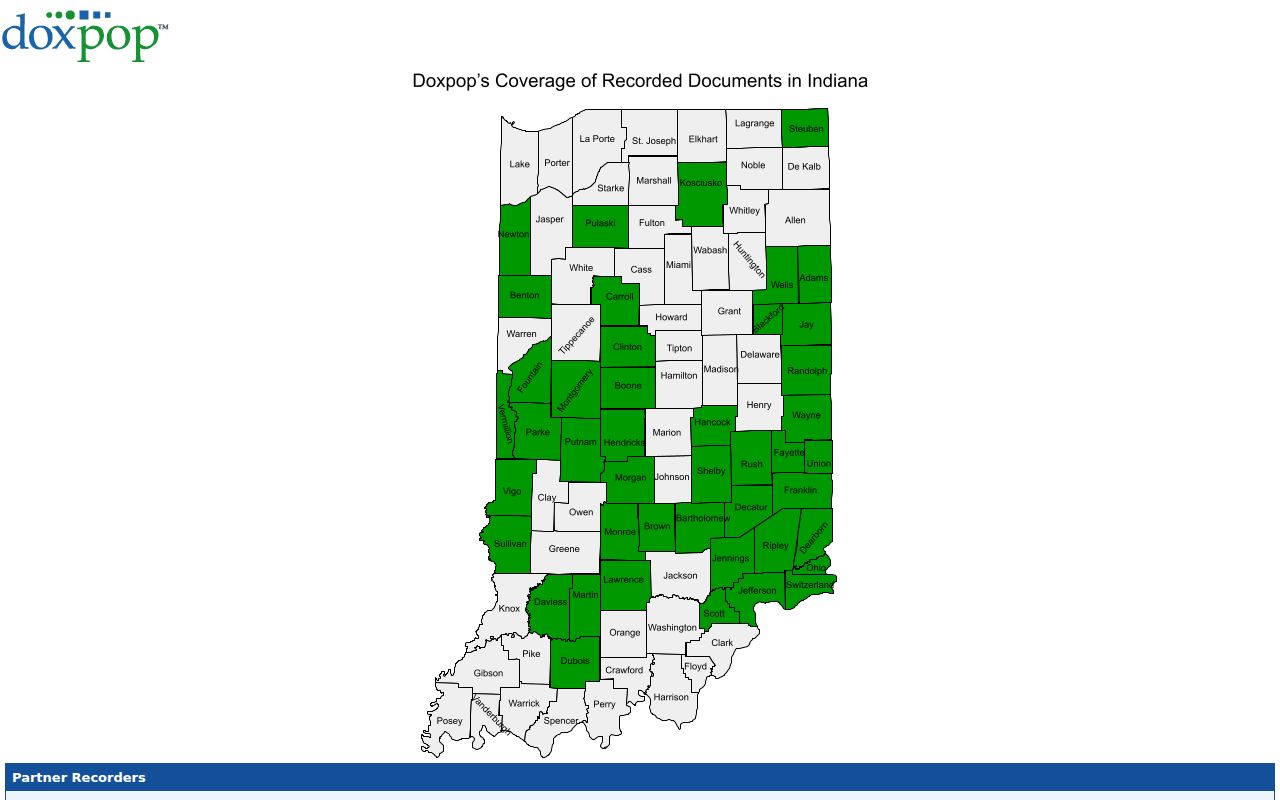
That coverage list tells you when to leave the online property search behind. From there the chain continues through Recorder deed books, microfilm, and archival collections.
Cross Vigo County's Online Time Boundary
The Vigo County Recorder keeps the instruments themselves. Once prior owners lead you before November 1996, request deed books, grantor and grantee indexes, microfilm, and plat references. The Indiana State Library Vigo guide opens further historic and genealogy routes.
Coverage limit. Doxpop's index begins in November 1996 and images in January 2001; older prior owners require book, microfilm, or archive work.
Reconstruct Vigo County's Deed Chain Backward
Read every transfer backward, from grantee to grantor. A matching name is only a candidate until the legal description agrees.
- Find the current grantee's newest matching deed.
- Read its grantor, date, type, and description.
- Search that grantor as an earlier grantee.
- Repeat and move to deed books at the online cutoff.
- Grantor / grantee
- Transferring and receiving parties.
- Chain of title
- The ordered sequence of transfers.
- Reverse index
- The grantee-side path used to find acquisition.
Bridge Vigo County Farms to Subdivision Lots
Older Vigo County deeds often describe land by section, township, and range. Later ones speak in subdivisions, lots, plat book pages, roads, and carved-out exceptions. Samples from Tuells, Yeakles, Deerfield, and Raintree Village show why a subdivision name can bridge the gap. A street address may no longer fit. Check every label against its recorded plat. Raintree layers numbered lots, community areas, government-survey language, easements, covenants, and exceptions into one deed. Keep all of those parts intact. Do not flatten them into a modern parcel number.
Work Around Vigo County's 2019 Index Quirk
Doxpop reported that Vigo County legal-description data went missing in 2019. The gap ran from October 7 through October 25. For deeds recorded in that window, search by grantor, grantee, and document number instead. Add the recording date as well. Then compare the deed image against the tract itself. Every other indexed field kept working through the gap. Note: Save the failed legal-description query. It explains why a second search route surfaced a different set of former owners.
Follow Vigo County's Special Transfer Branches
Quitclaims, correction deeds, personal-representative deeds, sheriff deeds, tax deeds, and court-directed transfers can all break a tidy chain. A transfer after a death may require the probate docket in MyCase, the order behind it, and the later Recorder instrument. Search spouse names, initials, trustee capacity, estate wording, and LLC suffixes exactly as written.
Log Every Vigo County Prior-Owner Link
A chain log keeps the whole property search auditable. Give each transfer its own row. List the deed date, recording date, grantor, and grantee there. Add the deed type, document or book-and-page reference, parcel key if known, the full legal-description clue, and image status. Add the search terms you used and the query date. One name can appear twice. The land description and the source-of-title reference separate the right person or entity from the rest. Record changes in description rather than forcing old wording into a modern parcel format. A farm tract may first be described by section, township, and range. It may later surface as a subdivision lot. Road dedications, rights-of-way, exceptions, replats, and parcel splits all reshape the wording over time. The Raintree Village sample stacks several layers at once. It runs from numbered lots and community areas to plat book references, easements, covenants, and a recording timestamp. City directories, newspapers, and genealogy indexes offer hints. They can hint that someone lived at an address in a given year. Treat them as leads, never as proof of ownership. Use the Indiana State Library collection guide for historical context. Then return to a deed, tax roll, probate order, plat, or court record that ties the person to the land. Keep residence and ownership as two separate facts.
Repair Breaks in a Vigo County Ownership Timeline
When a prior owner will not appear as a grantee, vary the attack. Test name order, initials, spouse and maiden names, trustee capacity, estate wording, and company suffixes. Search by subdivision, document number, recording date, and legal description. A legal-description query that comes up empty during the October 7 to October 25, 2019 gap needs a second pass. Use the party or document field for that second pass. Special transfers branch into other record sets. A personal representative's deed may rest on a probate order. A sheriff or tax deed may require a court docket. It may also need a sale notice, redemption history, or confirmation order. A correction deed may point back to an earlier instrument. Follow the cited source instead of assuming the deed type alone explains the change. For older chain work, go through the Recorder's index and deed books. Keep your last solid reference in hand. Ask specifically for the grantor or grantee index, deed book, plat book, or microfilm covering your known date and party. The Doxpop coverage boundary cannot prove that no earlier owner existed. It only marks where the vendor's online material stops. If the tract itself changed, run parallel lines for parent and child parcels. Record the instrument or plat that divided or combined them. A current street address can hide an older lot configuration. Two modern parcels may descend from one earlier conveyance. The chain is complete only for the land you are actually researching.
Use Vigo County Plats and Probate to Fill the Chain
Plats answer questions that deed language alone cannot. An old farm description can suddenly become a row of modern lots. The subdivision plat shows how the split happened. Search the subdivision using the exact spelling from the deed. Then record the plat book and page. Add lot and block numbers, roads, common areas, easements, covenants, and any exceptions. The current parcel map helps with orientation only. It never replaces deed language or a boundary survey.
Probate fixes a different kind of gap in the chain. Look up the decedent or estate in Indiana MyCase and identify the Vigo probate case. Request the specific order or filing you need from the Clerk. The estate file establishes authority, but the transfer itself lives in the Recorder index. Find the personal representative deed, affidavit, or distribution instrument there. Together they connect a court's authority to the parcel.
Tax-sale and foreclosure chains demand several sources too. Track the delinquency year, the notice or list date, and the sale date. Note any redemption, the order, and the deed recording date. A tax-sale list proves only one stage. It does not show that the buyer ever received title. Match Treasurer or Auditor material against court records and Recorder filings.
Directories and newspapers work as dated clues for house-history projects. A directory can place a person at an address without proving ownership. An obituary can name heirs without showing how the land passed. Every clue must return to a deed, probate order, tax roll, or recorded plat. Only then does it join the chain of former owners.
Test the Depth of Vigo County Ownership Records
A chain of title reaches only as far as its verified links. Flag every parcel split, name variant, missing image, probate transfer, and archive gap along the way. When descriptions or parties stop matching, never force an unbroken list of previous Vigo County owners.
Lawful use. Former-owner research supports house history and property diligence. Do not use living-person details to track, harass, intimidate, or harm anyone.